Experienced sexual violence therapist Sam Hope examines how the UK is creating a safeguarding problem of massive proportions, and reminds us one of Epstein’s first whistleblowers was a trans girl.
Photography is part of my creative practice, my mental health support, my meditation. Here I reflect on the importance of this practice to me as a neurodivergent therapist.
This blog seeks to unpack the lie, why it’s happening right now, what it means to want to push back on an empowered, visible and understood neurodivergent community.
Other people have written extensively about the dangerous, unscientific nonsense that is the Cass report, but I wanted to focus in on something that’s often being overlooked in the assault on the rights and care and autonomy of young trans people, and that’s the underlying ageism in the narratives.
As an autistic trans person who works with a lot of autistic trans people, and more broadly with a lot of neurodivergent LGBTQA+ people, I’ve been studying this overlap for a long time, and I now ofer talks and training to help people makes sense of this phenomenon.
This month, the latest edition of The Sage Handbook for Counselling and Psychotherapy, in which I was invited to write the chapter on gender, has been published. (Please see flyer below for a discount code).Writing the chapter ended up being the culmination of work I began when I studied a trauma Masters a decade ago,… Read more: Writing this chapter changed my thinking
This is some of the existing research and conversation underpinning what I would like to have discussed (but can’t due to delays in launching findings) at the BACP Research Conference. I hope those looking forward to my talk will enjoy this very different presentation that still retains some elements and talks about what trans people… Read more: Sam Hope Speaking on Affirmative Therapy
Content note for eating disorders, sexual abuse, gender incongruence and dysmorphia A discussion came up in a clinical consultation group I’m involved with about the number of trans people who have disordered eating. I reeled off some thoughts are not always considered, so I’m repeating them here. It is well known that trans experiences often… Read more: Why do so many trans and neurodivergent people have eating issues?
I gave this interview back in August, but it still feels relatively current, referencing GRA reforms, JK Rowling, and the situation for trans people across Europe. It took place prior to the Government’s decision not to reform the Gender Recognition Act in the UK. With thanks to Ibtisam Ahmed for giving me… Read more: Podcast On Trans Issues
An extract from a talk I did for the University of Nottingham for Transgender Day of Visibility (31/3/20), detailing some of the extra complications that exist for the trans community around this pandemic.
* Please note, I use certain language in this video that is ingrained but not ideal – It’s interesting how when we’re tired and stressed we use less skilful words! 1. Trans people being on a “journey” is an unhelpful cliche. 2. Most trans people who were assigned female at birth would prefer to refer to their upper body with the word “chest”. 3, Gender incongruence has superceded the term gender dysphoria, according to the World Health Organisation, and is generally preferred in-cumminuty, although not by everyone.
 Experienced sexual violence therapist Sam Hope examines how the UK is creating a safeguarding problem of massive proportions, and reminds us one of Epstein’s first whistleblowers was a trans girl.
 Photography is part of my creative practice, my mental health support, my meditation. Here I reflect on the importance of this practice to me as a neurodivergent therapist.
 This blog seeks to unpack the lie, why it’s happening right now, what it means to want to push back on an empowered, visible and understood neurodivergent community.
 Other people have written extensively about the dangerous, unscientific nonsense that is the Cass report, but I wanted to focus in on something that’s often being overlooked in the assault on the rights and care and autonomy of young trans people, and that’s the underlying ageism in the narratives.
 Trans people exist within a quirky population cluster that also contains a number of other divergences: How we respond to this matters
 As an autistic trans person who works with a lot of autistic trans people, and more broadly with a lot of neurodivergent LGBTQA+ people, I’ve been studying this overlap for a long time, and I now ofer talks and training to help people makes sense of this phenomenon.
 In this longer essay, I reflect on how we hold space for difference and the way this impacts on whether and how certain conversations happen.
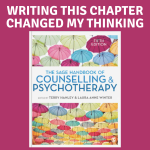 This month, the latest edition of The Sage Handbook for Counselling and Psychotherapy, in which I was invited to write the chapter on gender, has been published. (Please see flyer below for a discount code).Writing the chapter ended up being the culmination of work I began when I studied a trauma Masters a decade ago,… Read more: Writing this chapter changed my thinking
 This is some of the existing research and conversation underpinning what I would like to have discussed (but can’t due to delays in launching findings) at the BACP Research Conference. I hope those looking forward to my talk will enjoy this very different presentation that still retains some elements and talks about what trans people… Read more: Sam Hope Speaking on Affirmative Therapy
 Content note for eating disorders, sexual abuse, gender incongruence and dysmorphia A discussion came up in a clinical consultation group I’m involved with about the number of trans people who have disordered eating. I reeled off some thoughts are not always considered, so I’m repeating them here. It is well known that trans experiences often… Read more: Why do so many trans and neurodivergent people have eating issues?
 I gave this interview back in August, but it still feels relatively current, referencing GRA reforms, JK Rowling, and the situation for trans people across Europe. It took place prior to the Government’s decision not to reform the Gender Recognition Act in the UK. With thanks to Ibtisam Ahmed for giving me… Read more: Podcast On Trans Issues
 An extract from a talk I did for the University of Nottingham for Transgender Day of Visibility (31/3/20), detailing some of the extra complications that exist for the trans community around this pandemic. * Please note, I use certain language in this video that is ingrained but not ideal – It’s interesting how when we’re tired and stressed we use less skilful words! 1. Trans people being on a “journey” is an unhelpful cliche. 2. Most trans people who were assigned female at birth would prefer to refer to their upper body with the word “chest”. 3, Gender incongruence has superceded the term gender dysphoria, according to the World Health Organisation, and is generally preferred in-cumminuty, although not by everyone.
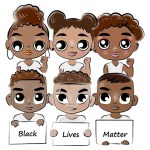 A white counsellor’s experience of examining their unconscious racism
 Therapist Sam Hope explores the way we respond to calls and inquiries made for sexual gratification
 Therapist Sam Hope sings the praises of video counselling
 Sam Hope